Many business owners reach a point where they believe software is the answer.
Employees are asking too many questions. Managers seem overwhelmed. Performance is inconsistent. Processes vary from one department to another, and important decisions still land on the owner’s desk.
The natural response is often to look for better technology.
A modern HR software solution for small businesses can certainly improve efficiency, automate administration and simplify many day-to-day HR activities.
But software alone cannot fix a business that lacks clear systems, accountability and leadership.
Technology is an enabler—not a substitute for good business management.
When HR Challenges Are Actually Business Challenges
Many of the issues businesses experience are often symptoms rather than root causes.
You may recognise some of these situations:
- Employees rely heavily on the owner to make decisions.
- New team members take too long to become productive.
- Performance reviews feel subjective and inconsistent.
- Managers each follow different processes.
- Critical business knowledge exists only in one person’s head.
- Accountability is unclear across the organisation.
These are not simply HR problems.
They are business capability challenges that affect the way people work together.
Great HR Software Builds on Strong Foundations
A well-designed HR platform provides significant value by helping organisations manage:
These features create efficiency and improve visibility across the organisation.
However, they deliver the greatest value when the business already has:
- Clearly defined roles and responsibilities.
- Documented business processes.
- Consistent management practices.
- Measurable objectives.
- A culture of accountability.
Without these foundations, software simply digitises existing inefficiencies.
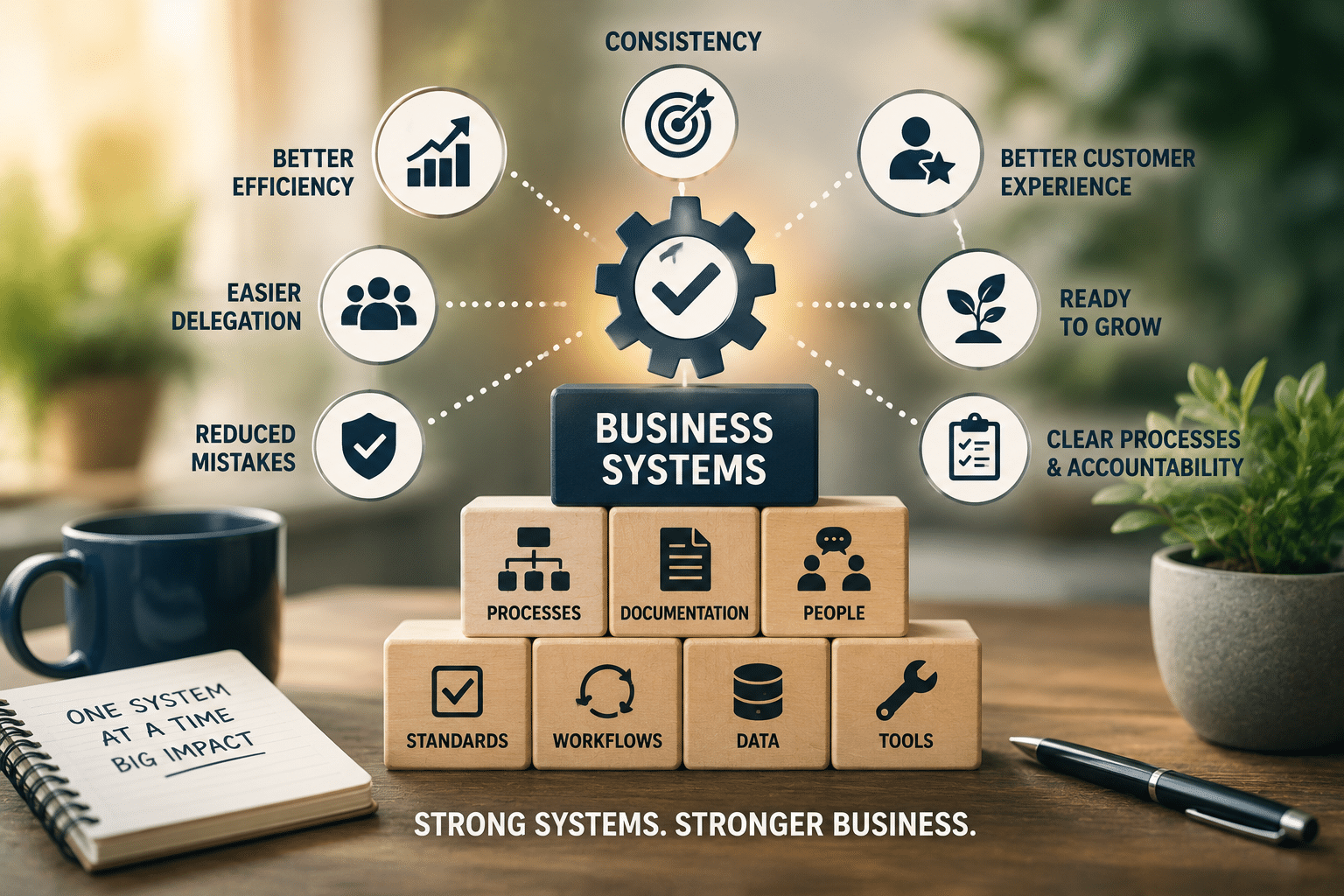
People, Processes and Technology Must Work Together
Successful businesses understand that sustainable growth depends on balancing three essential elements:
- People who understand their responsibilities.
- Processes that create consistency and reduce dependency on individuals.
- Technology that supports efficient execution.
Removing one of these elements creates unnecessary pressure on the other two.
Investing in technology without strengthening people and processes often leads to disappointment because the underlying business challenges remain unchanged.
Before Investing in New Software, Ask These Questions
Before implementing another business system, consider the following:
- Can the business operate effectively without the owner being involved in every decision?
- Are responsibilities clearly documented?
- Are managers leading consistently?
- Are business processes repeatable?
- Do employees understand what success looks like?
- Are we solving operational problems or simply adding more software?
These questions often reveal opportunities for improvement that technology alone cannot address.
Better Business Decisions Start with Better Measurement
At DataSimplified, we’ve worked with businesses implementing software solutions across many different industries.
The organisations that achieve the greatest success are usually those that first understand the overall health of their business.
That thinking led to the development of the Business Evolution Score, a practical business assessment platform that helps business owners measure their organisation across seven critical business pillars, including People & Leadership, Operations & Delivery, Finance & Cashflow, Strategy & Growth and more.
Understanding where your business is strong—and where hidden risks exist—helps ensure that future technology investments deliver real business value.
Ready to Understand Your Business Before You Buy More Software?
If you’re considering new systems or looking for ways to improve business performance, start by understanding the health of your business first.
The Business Evolution Score provides a practical assessment with personalised insights, strengths, risks and recommendations to help you prioritise what to improve next.